“All the Questions”
second Sunday after Epiphany
January 18, 2026
Isaiah 49:1-7
John 1:29-42
As usual, John tells the story of Jesus significantly different than the other gospel accounts. In Luke, when pregnant Mary encounters pregnant Elizabeth, John leaps in Elizabeth’s womb at recognition of the Messiah in Mary’s womb. In today’s gospel account, John doesn’t recognize Jesus until he sees the signs that God told him to look for. In the other accounts, Jesus comes to John to be baptized. In today’s account, we never hear if Jesus was baptized at all. In the other accounts, when the Spirit descends on Jesus, God says, “This is my Beloved Child, with whom I am pleased.” God doesn’t speak these words of affirmation in John’s account.
Instead, John leaves us with questions—questions posed in today’s text and the passage just prior to it. Who are you? What are you looking for? Where are you staying? And the rest of the gospel account will expand on the answer in many and varied ways. But while the answer is complex, it is also simple. Come and see.
In verse 19, priests and Levites were sent to John who had been sent by God to baptize with water. They asked, “Who are you?” And he testified that he was neither the Messiah nor Elijah nor the Prophet. He was simply the one to point to the Messiah—to recognize and declare to the world the Word, the Light, the Truth, the Way, the God-in-flesh. In today’s passage, we hear several answers to the question: Who are you? The names for Jesus come from John the Baptist and his disciples: Lamb of God, Son of God, Rabbi, and Messiah. Rather than disciples gradually coming to recognize Jesus as Messiah, they immediately grasp his role. And we’ll here these names again and again throughout John’s gospel account.
This question will hang in the air as Jesus performs signs—the word John uses for the miracles Jesus performs. Every sign Jesus does is testament to who he is. Jesus will also double-down on his identity as he says, seven times, “I AM.” I am the bread of life, the light of the world, the way and truth and life, and so on. At his crucifixion, Pilate has a sign placed with Jesus: “Jesus of Nazareth, the King of the Jews.” And finally, as the risen Jesus enters the room with the scared disciples, he proves his identity by eating with them and having him place their hands in his wounds. When Thomas—late to the party—experiences Jesus, he says, “My Lord and my God!”
Who are YOU? And who gets to determine the answer? In John, there were a lot of potential answers to that question for Jesus. Even when the answers were correct, the interpretations were often wrong. Jesus’ conversation with Pilate before his crucifixion lays out that being the ‘king of the Jews’ isn’t an earthly reality. It isn’t ‘ruling over’ but ‘serving with.’ Being the Messiah isn’t a warrior identity but a servant identity. And because of others’ assumptions about who Jesus was or should be, they killed him rather than follow him. Jesus said, “Come and see.” But humanity refused to see who he was and made him what they wanted. And we continue to do that today—to Jesus, and to others.
People make assumptions about you and me all the time—assumptions based on physical appearance, vocation, age, skin color, education, genitals. Everyone thinks they know something about you because they’ve seen something like you before. We do it all the time. We see one example of one type of person and extrapolate from there—all people with that description are all the same. But that’s not how it works. Jesus is uniquely the Messiah—and a Messiah that no one could even imagine. You are uniquely you—one that no one knows better than you do. You are a little like everyone and nothing like anyone. You are Beloved Child of God.
What are you looking for? As Jesus walks past John and his disciples, two of the disciples begin to follow Jesus from a distance. Unlike my response—“What do you want?”—Jesus asks something a little different. What are you looking for? What are you seeking? What do you need? What are you lacking? All of those questions wrapped up in his asking.
Soon after this encounter, a Pharisee named Nicodemus will come to Jesus in the cover of darkness, wanting to understand better. He wants to believe. He wants to know. He wants hope. But he just can’t wrap his head around what Jesus tells him about baptism and new life. In Samaria, Jesus encounters a woman at the well who has been ostracized by her community because she has been married multiple times—we don’t know why. She is looking for relief—for water that doesn’t run dry, for community and connection. After her encounter with Jesus, she told her whole village about him and many believed. She was restored.
Along the way, Jesus heals the sick and feeds the hungry—not just with bread but with God’s Word. To those seeking light in the darkness, Jesus is the light. Those seeking wholeness, Jesus heals. To those who are hungry, Jesus is bread. To those who are thirsty, Jesus is water. To those who cannot see, Jesus brings understanding. To those who are lost, Jesus is the shepherd. To all who long for new life, Jesus is the resurrection.
What are YOU looking for? I think, at the heart of us all, we are looking for an end to suffering, pain, and violence. We are looking for an end to injustice. We are looking for new life and true life and joy and hope and relief. And none of these things come with the snap of a finger. Wouldn’t that be nice? But all of these things are found in Christ. I don’t mean that to be an easy or trite comment. The more people follow Jesus’ teachings—often as opposed to many of the church’s doctrines—the better our world will become.
Two weeks ago, I lifted up the Buddhist monks walking for peace from Fort Worth to D.C. That is Christ-like. You don’t have to be Christian to be Christ-like. Ghandi was Christ-like and Hindu. Greta Thunberg is Christ-like but not a Christian. It seems that once we are more concerned about others’ well-being and less about our own, we can begin to shift the world toward good. Slowly. Together. Come and see. It’s the first step to recognizing Christ in ourselves and others.
Where are you abiding? It’s what the disciples ask Jesus once he confronts them. Perhaps it’s simply a question of where he plans to stay the night. But this is John’s gospel account. It’s never that simple. In John’s Prologue introducing the Word, he says, “And the Word became flesh and abided/lived/dwelt among us, and we have seen his glory, the glory as of a father’s only son, full of grace and truth.” God has come to live among us. And yet, it feels so hard to pin God down. But Jesus says, “Come and see.” And that becomes quite a journey.
Throughout the gospel, Jesus is on the road. He’s in Jerusalem and Bethsaida and Bethany. He dies on Golgotha and is buried in a garden. He is a man who is everywhere and nowhere. At the last supper, Jesus talks at length about abiding. “I am the true vine, and my Father is the vinegrower. Abide in me as I abide in you. I am the vine, you are the branches. Those who abide in me and I in them bear much fruit. As the Father has loved me, so I have loved you; abide in my love.”
And all of a sudden, the question is no longer where Jesus abides but where we abide. The question isn’t “Where is God?” but “Where are we?” Are we connected? Are we plugged into the life of Christ? Are we branches growing from the true vine and bearing fruit? Or are we striving to get by on our own power? Our own preferences? Our own interests?
Jesus isn’t asking us to chase after him. He meets us where we are, in all of our questions and concerns. He envelopes us with the Spirit and invites us to commune—to get connected. Connection with Christ is where we will find life. And love. And the strength to meet ugliness in this world and stand for God’s beauty.
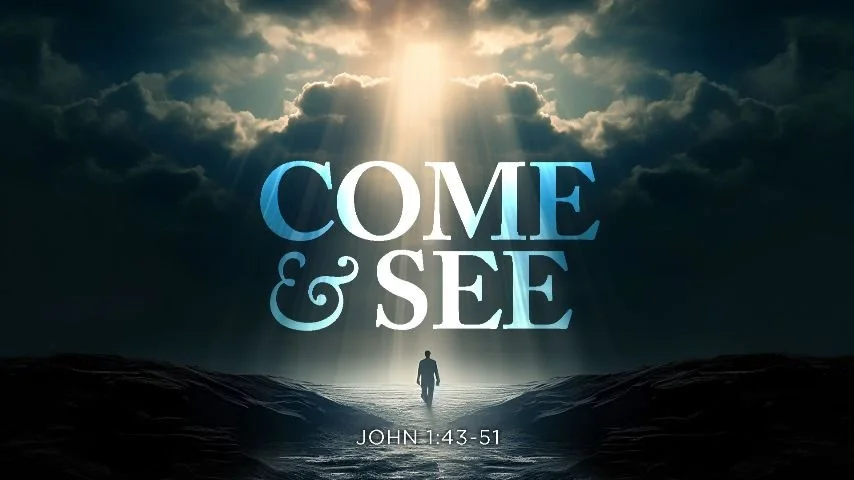
Who are you? What are you looking for? Where do you abide? The answers to these questions start with one simple step: Come and see.
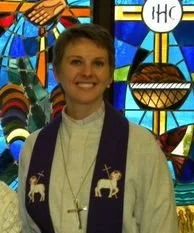
Pastor Tobi White
Our Saviour’s Lutheran Church
Lincoln, NE