“All is God’s”
Twenty-First Sunday after Pentecost
October 18, 2026
Isaiah 45:1-7
Matthew 22:15-22
In Genesis, we read, “And God said, ‘Let us make humankind in our image, according to our likeness…so God created humankind in God’s image, in the image of God, God created them.”
This word, ‘image,’ is the word Jesus uses when he responds to the test that the Pharisees and Herodians put to him. “Whose image is this, and whose title?” It’s a simple question, but it’s filled with political and religious rhetoric that we often miss when we read it.
The question on the table is this: Is it lawful for a Jew to pay taxes to Caesar? If Jesus says ‘yes,’ then the Pharisees can arrest him for blasphemy, honoring a man who claims to be God. If he says ‘no,’ the Herodians can have him arrested for tax evasion, subversion, and even rebellion. Either way, Jesus loses.
But Jesus turns the tables and asks if anyone has a coin used for Roman taxes. Now, when someone enters the Temple, they aren’t supposed to bring Roman coins in because the Roman coin has the image of Caesar on it, and that would defy the commandment, “You shall have no other gods,” which includes within it the images of gods. But someone has such a coin…in the Temple. And they show it to Jesus.
He asks, “Whose image is this?” It’s Caesar’s. And what is the engraving? It identifies Caesar as divine—as a god. And at this point, the group of testers is already convicted by the Law of Torah. They know they’re in trouble. But Jesus puts the final touch on it. “Give to Caesar what belongs to Caesar, and give to God what belongs to God.”
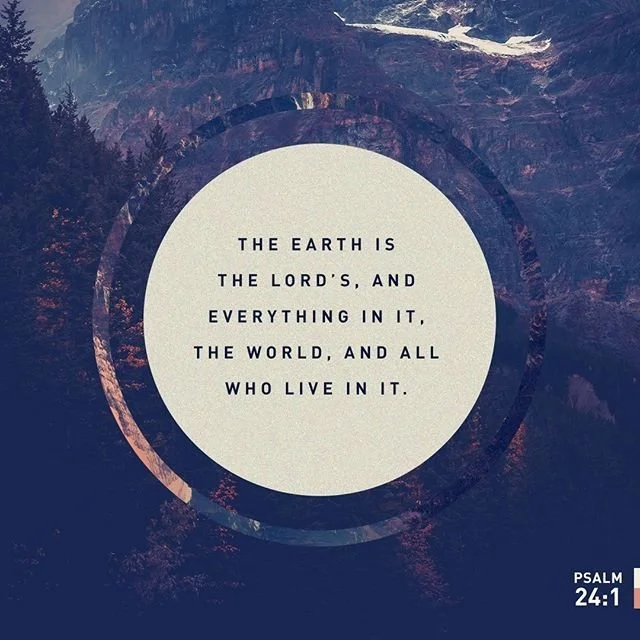
But what does that mean? THAT’S the question! You see, they should all know well their Torah—where Psalm 24 begins, “The earth is the Lord’s and all that is in it, the world, and those who live in it.”
To whom do we belong, anyway?
Native American mythologies often tell of the Windigo—a greedy, self-absorbed, hungry demon that consumes everything in its sight. Botanist Robin Wall Kimmerer suggests that our market system often operates like the Windigo—when it creates scarcity by withholding what is abundant for the sake of greed. Like when warehouses of food rot because of political ambition or because those who need it cannot pay for it. The Windigo—this greed that underlies so much of our society—is a denial the image of God in God’s people. And in denying God’s image, it denies God.
Theologian Amy Frykholm talks about her husband’s experience in visiting a library in Mali. A woman began going around serving lunch to everyone. But he hadn’t ordered any food. He wasn’t a dignitary. He wasn’t an employee. He tried to convey that he didn’t think the food was for him, but she merely said, “All food belongs to Allah,” and set the plate of food down next to him.
“The earth is the Lord’s and all that is in it.” “Let us create humanity in our image.” What if we actually believed what Scripture says? What would it look like to live that out? Amy goes on, telling about serving in a soup kitchen and food pantry. And when families come in, hungry and desperate, she also sees the shame on their faces. She wants to tell them that this is what the world SHOULD look like—not hunger and desperation, but sharing and generosity.
What if, she imagines, the kindom of God were more like a soup kitchen than a model of comfort and self-sufficiency? What if the goal were to gather and share and give and receive, rather than learn to live without need of anyone else?
This is the beauty of the communion table. Jesus invites everyone. He doesn’t ask what religion you are or who you’re going to vote for. He doesn’t ask if you pay taxes or if you receive SNAP benefits. He doesn’t make worth, citizenship, or patriotism the litmus test for who is welcome and who isn’t. He simply opens the kitchen, brings out the food, and says, “Eat. All of you. This is me—my body, my blood. This is my gift to you. Because the whole earth is the Lord’s and all that is in it. All food belongs to Allah. All humanity bears my image.”
To whom do we belong?
Jesus forces both the Pharisees and Herodians to struggle with the reality that the political forces of both the nation and the church are not worthy of our worship—that we truly belong to neither. That the structures and the ways in which the structures are maintained are human creations. That money is a human standard, deemed necessary by society in order to live—but a standard whose value fluctuates on the whims of those in power.
But people are created by God. Our value is always fully realized in God’s love and compassion. We are not meant to be exchanged or used for goods and services. We are to be honored, cared for, and loved—but never worshiped. We are made in the image of God. We belong to God. Caesar belongs to God. The president belongs to God. Caesar is NOT God. Kings and presidents are NOT God. Nations and states are NOT God. The Church is NOT God. (Sports teams are not God.)
To whom do we belong?
When Jesus addresses his accusers, he calls them hypocrites. The word hypocrite, in Greek, refers to someone who wears a mask to cover their true identity. It’s a false image—a false likeness. They have forgotten who they are, and whose they are. They no longer live as ones who worship and follow the God who created them, the God in whose image they were made. The God to whom they belong.
I don’t think Jesus cared much about the taxes—outside of the injustice that they heaped upon the poor. His point was so much bigger. He wanted to know to whom we look for salvation. To whom do we look when things get rough? With whom do we trust our lives? To whom do we belong? Caesar, or God? Our lives belong to God.
Life isn’t about money or privilege or status or power—no matter what our society tries to tell us. It isn’t about who deserves what or who has more. Life is about living out the image of God that is stamped on the heart of each of us—the image that shines forth from our faces, our bodies, our actions. That is how we worship God. That is the legacy we want to leave—an open kitchen, a full banquet, a welcome table. All food belongs to Allah. Come. The soup kitchen is open for business, and we do this together. All of us. As God’s beloved Creation.
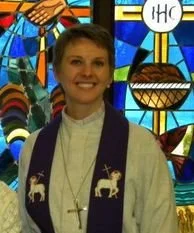
Pastor Tobi White
Our Saviour’s Lutheran Church
Lincoln, NE