All Saints Day
November 1, 2026

Micah 3:5-12
Matthew 23:1-12
“Do as I say, not as I do.” We’ve likely all said it—or at least heard it. It’s often an adult’s way of admitting we’re taking shortcuts, but we expect the younger generation to behave better. Do better. Be better. But at its core, it’s still hypocrisy. And we’re all guilty.
In Matthew, Jesus points out hypocrisy more than a dozen times. Don’t be like the hypocrites, who pray loud and long in the town square; or the hypocrites who sound a trumpet every time they make a donation; or the hypocrite who dirties their face to show that they are fasting. He quotes Isaiah, saying, “You hypocrites praise me with your lips, but your hearts are far from me.”
And then, in Chapter 23 alone Jesus uses the word 6 times to critique the scribes and Pharisees. They make it impossible for others to experience God’s kindom; they turn people’s new faith into hell on earth; they show off how great they are at the little things, but when it comes to real justice, they are nowhere to be found; they focus on what people can see, but inside they are dead. And this particular rant begins with today’s reading.
But Jesus doesn’t tell the people to ignore the scribes and Pharisees. In fact, he specifically tells them to listen to them. To follow the observances they have laid out. Because what they say is, in fact, right. But that’s where the respect ends. Because what they say and what they do don’t match up.
Now, I get what he’s saying. I have always had a problem with the double standard. You have to do this, but I don’t because I’m…fill in the blank. I don’t because I’m the parent; I’m the pastor; I’m white; I was born here. But I disagree with Jesus on one point. Whether it’s religious leaders or political leaders, if someone isn’t going to do what is expected of everyone else, they shouldn’t be in a position of power. We should have higher expectations of those people. Not lower. I shouldn’t have to listen to someone who doesn’t do what they say others should do.
And the problem with power is that it invites the opportunity to make excuses for oneself. In 2003, a study was done by two psychologists. The “Cookie Experiment” looked at how power affects entitlement. In the experiment, 3 participants (all the same gender) were asked to discuss various political issues and make policy recommendations. One participant was identified as the ‘judge’ of the conversation and was asked to assign points, rating the recommendations of the other two.
After about 30 minutes, someone would provide a plate of cookies for the group—5 cookies, to be exact. Five cookies. Three people. Someone would have to settle for just 1 cookie. And most of the time, that person was NOT the person assigned as judge. The one with power nearly always had two cookies. Not only that, but they tended to eat more sloppily and leave crumbs on the table.
It’s weird what positions of power can do to people. And believe me, I’m well aware that I’m standing here with the mic today. I’m also aware that I get paid to be here. You don’t. I get paid to go to meetings. You don’t. You don’t get paid to clean up the yard. You don’t get paid to go to Bible studies. And yet, you’re here. You’re here because you love God, you love each other, and you trust me.
We have been trained to give deference to certain people—simply because of who they are or what they do. Think about the ways in which people idolize sports celebrities, actors, and even politicians. Consider how—at least at one time—even pastors received special treatment in the community. They are all just people. Flawed people. And not only do they not deserve special treatment just because of wealth or status, but our way of idolizing people is backwards.
God doesn’t think more highly of Nebraska’s quarterback than of you. God doesn’t love the pope more than you. When Jesus tells the crowd not to call anyone father or rabbi because we only have one, he doesn’t mean literally using the words ‘father’ or ‘rabbi.’ What he means is that we should never lift anyone up as a god who is not God. Nobody—no matter their status, wealth, or job—is deserving of that kind of worship.
At the same time, Jesus also reminds us that the greatest in our midst are those who often go unseen. The ones with true power are the servants. There’s a YouTube influencer Mark likes to watch who goes across the country, interviewing various people and learning about their community and their culture. He went to a small community in Florida filled with migrant workers from Mexico and Guatemala.
As he was interviewing one woman, she pointed out what I think we all know. She said something along the lines of, “We are what keeps this country going. Without us, there is no food.” That is power. Not elected power. Not recognized power. But real, functional power.
Not long after this conversation, Jesus will be arrested and hung on a cross, naked and vulnerable. And in that moment, it will feel like he has no power at all. But that’s the moment in which he says his glory will be shown to the world. It’s in his death and vulnerability that God’s greatest power is displayed. Because one’s authority isn’t just the ability to influence others; it’s the ability to choose the best for others when one could take care of one’s own self, instead.
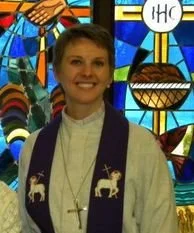
Pastor Tobi White
Our Saviour’s Lutheran Church
Lincoln, NE