“A Call With a Cost”
Third Sunday in Advent
December 14, 2025
Jeremiah 1:4-10
Luke 1:26-39
Children’s Message:
Has there ever been a time when someone asked you to do something and you didn’t feel like you were prepared or ready to do it? What did that feel like?
You know, that’s how I felt before I preached my very first sermon. I was in South America. I had taken a few classes, but nothing on preaching. I didn’t know where to begin or what to say or how to say it. But, when the time came, I got up in front of everyone and gave a sermon.
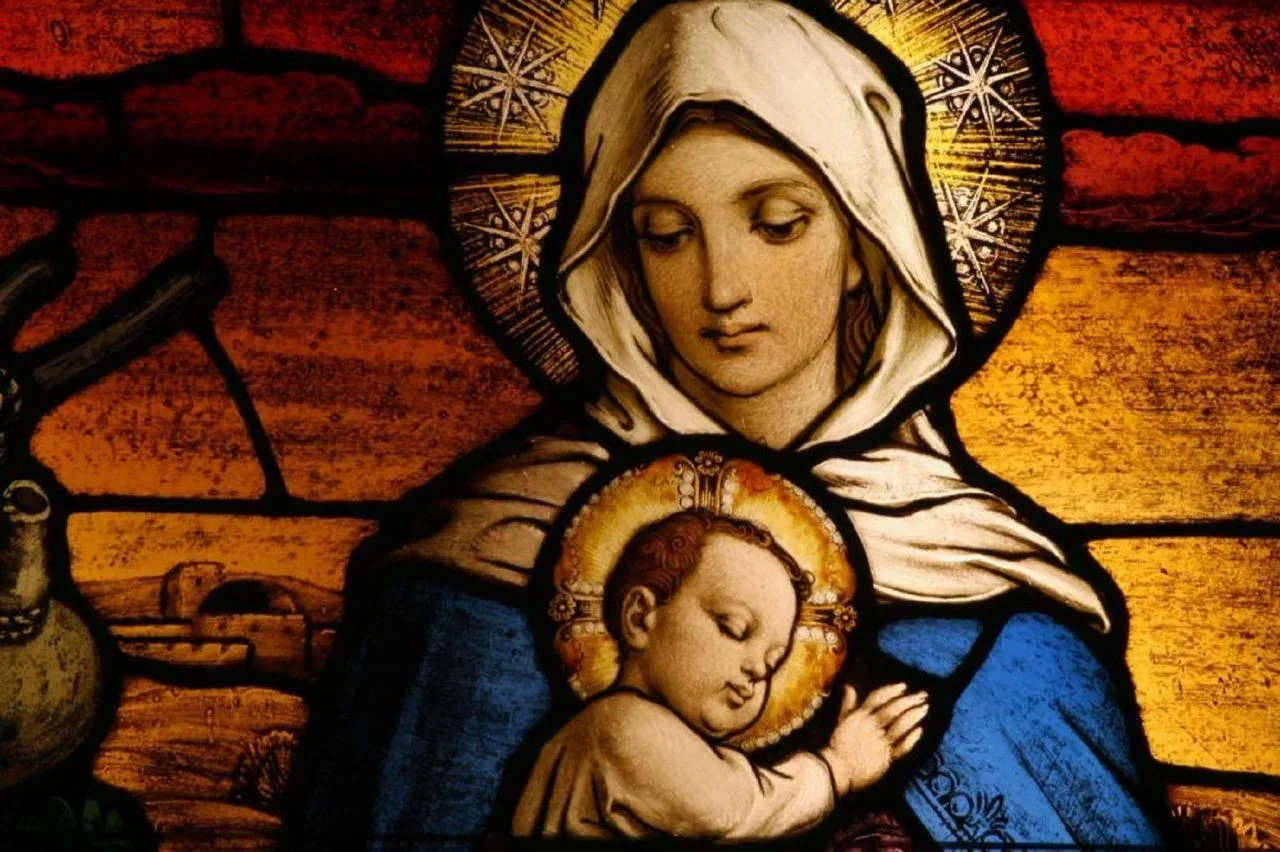
It wasn’t very good. But I stumbled through it. Even though I was scared I did it. I imagine Mary was pretty scared when the angel came to her and said she was going to have a baby. Having a baby is scary anyway. But there were a lot of things in Mary’s life that made it really, really scary.
But what did Mary say? She said ‘yes.’ That was really courageous. When have you been courageous? What we need to remember is that having courage doesn’t mean we stop being afraid. It means we do something even when we’re afraid.
Let’s pray. Dear God, sometimes you ask us to do hard things, and we are afraid. Give us the courage to follow you, anyway. Amen.
Message:
The angel said, “Rejoice, highly favored one!” And, “You have found favor with God.” Lord, let me disappoint you just enough to not have this level of responsibility offered to me. Because the level of courage Mary had to have in order to say ‘yes’ is off the charts. And if you have never noticed, let me point this out to you. She was given an option. She was not forced or coerced. The angel laid out God’s plan. And only after hearing everything did she say, “I am the servant of God. Let it be done to me as you say.”
That is important. In a world where women had no say in pretty much anything, God gave her a choice. In a world where empire had all the power; where the religious leaders called the shots locally; where men were the heads of the household, God invited Mary into something to which she could say ‘no.’ Even in today’s culture, that’s still a big deal for many.
And in that invitation, Mary found the courage not only to say ‘yes,’ but to enter into the imagination of God—to proclaim what this child would mean for the world. When she reaches Elizabeth’s home, and Elizabeth’s baby kicks out as Mary enters the door in response to the Christ’s presence, Mary begins to sing. She sings of a reality that looks to the future—and yet she uses the present tense in the original Greek.
The Christ scatters the proud, brings down the powerful, lifts the lowly, fills the hungry, and sends away the rich. It is something that is happening. Something that will continue happening. Never completed until all are restored in the reign of heaven. God’s actions are ongoing—at work in us and through us to accomplish God’s justice in a world that is deeply entrenched in greed, love of power, and abuse of the vulnerable.
This is the courage Mary exhibits when she says ‘yes.’ It’s a courage that is born out of her vulnerability. Because that is the only way courage can be present. Like I told the kids—courage isn’t the lack of fear but the willingness to move forward in the presence of fear. Fear means vulnerability. And courage means taking a risk without the assurance of safety. It means knowing there will be challenges ahead and trusting that God goes with you to meet them.
Mary’s vulnerability has many levels. She is a young woman engaged to be married. She, herself, admits that she is still a virgin. To become pregnant in this reality holds the death penalty by stoning at the doorstep of her father’s house. It’s meant to bring death to her and shame to her household. The physical reality of pregnancy also holds risk—just as it does today. All of the various potential medical concerns were present then, along with all the dire consequences. The maternal mortality rate was 30% in 1st Century Israel. And if Joseph wasn’t on board, and if she wasn’t killed or didn’t die in childbirth, she would be left as a single mother in a world where she had no opportunity. She would be left begging in the streets, her child likely sold into slavery so that he didn’t die from starvation.
It took courage to say ‘yes.’ As Rev. Dr. Boyung Lee states in this week’s Advent devotions, “Call often comes when we’re just trying to survive…Survival mode leaves little space for dreaming—let alone imagining oneself ‘blessed among women.’” And God’s call always comes with a cost.
Jeremiah’s work as God’s prophet left him lonely, despondent, and an outcast. He was faithful in proclaiming God’s displeasure with Israel’s behavior and lack of obedience. He forewarned of exile and disaster. He told the people things they didn’t want to hear. And he began as a youth, when God called him and his initial response was, “I’m only a kid.” He may not have known the dangers ahead of him, but he knew he wasn’t ready for what God was calling him to do. God called anyway. And God’s call came with a cost.
Mary and Jeremiah are only two of dozens of people noted for their faithful obedience to God’s call. They are not alone in their vulnerability nor their courage. Thousands of immigrants each year leave the danger of their home in order to find safety in the uncertainty of another place. Youth who identify as queer step into themselves as they face the uncertainty of the response of family and friends. It isn’t lack of fear that leads people to move from one reality to another. It’s courage. And hope. Hope that what is before them will be worth the risk.
This is the hope Mary had and sang about. The hope that her child will upset the systems of injustice and cruelty; that he will provide for those with nothing and reduce to nothing those who have hoarded it all. Her Magnificat is a war chant—God’s battle song. Unfortunately, 2,000 years of Christendom has tamed her words into something sweet and palatable. Something that those of us who have much can be comfortable with.
But the birth of Jesus isn’t comfortable—though it should be comforting. It means that God is active in this world in a way that should make the privileged and proud tremble. It means that God is disrupting our daily lives in a way that is more than mere inconvenience. It means that God is intruding into the systems that have become routine and shaking them to the core.
It means that God is calling us to be fierce midwives of justice—to help bear the Christ into the world. And God’s call always comes with a cost. It requires courage and vulnerability as we sing out against injustice. Will our response be, “Lord, let me disappoint you just enough to not have this level of responsibility offered to me?” Or will it be, “Here we are, servants of God. Use us in ways that please you.”
Pastor Tobi White
Our Saviour’s Lutheran Church
Lincoln, NE