“Resilience Force”
Fourth Sunday in Lent
March 15, 2026
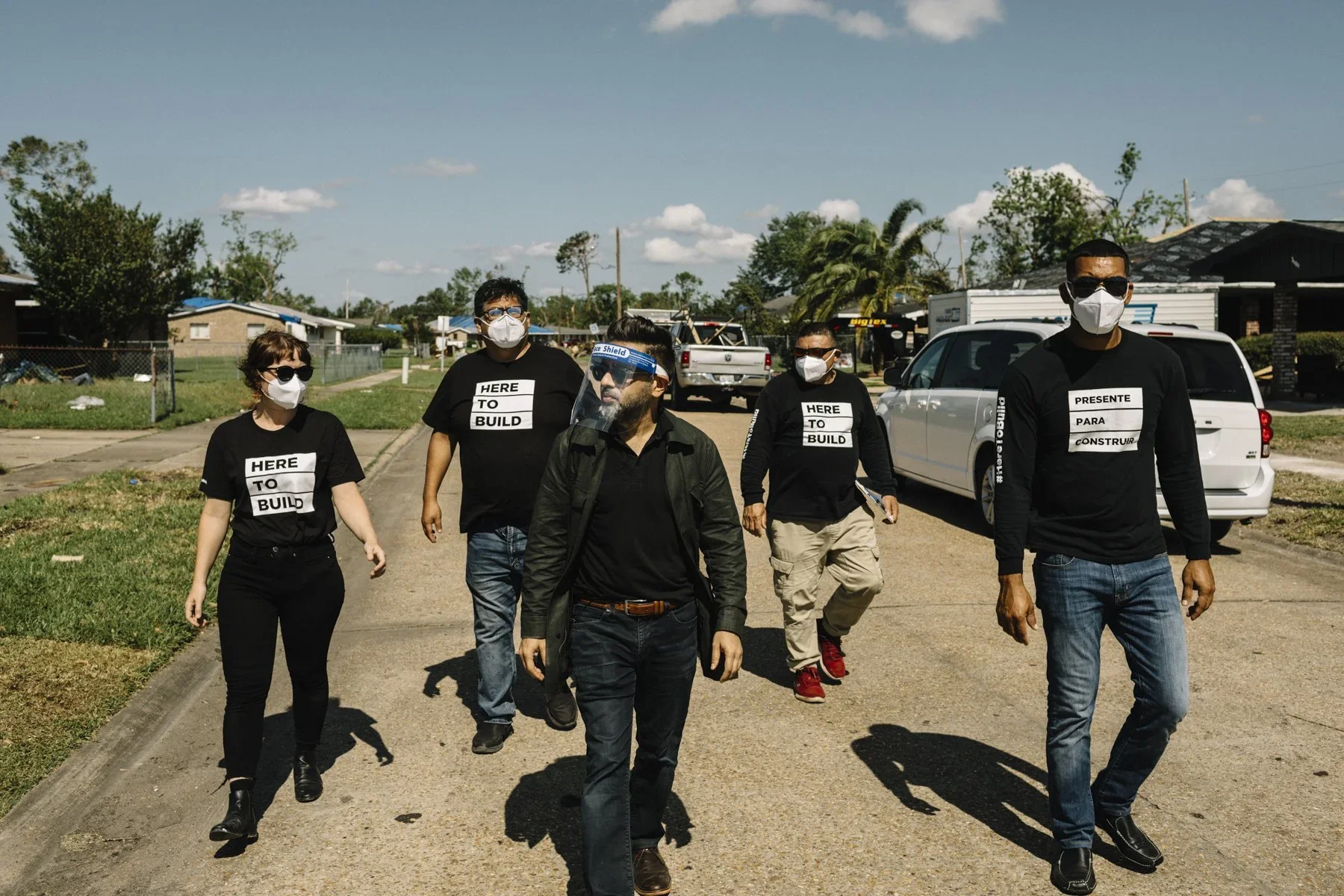
Click the picture above to learn more about the ‘Resilience Force’ organization.
Deuteronomy 24:17-22
Matthew 19:13-15
Children’s Message:
I may have mistakenly invited my mom to bring her dog to church this morning. It’s sort of an experiment. How many of you have a pet at home? Who is responsible for taking care of your pets? What does that include? (food, water, place to go potty, going for walk, taking to the vet, vaccinations, medication, protection, housing). It’s a pretty big job! But animals can survive in the wild, can’t they? There are squirrels and foxes and coyotes. There are even cats and dogs in the wild.
But their lives aren’t as easy. Or as certain. Or as long. There are dangers, aren’t there? We use the word, ‘vulnerable.’ You’ll hear that word a lot today.
Are you vulnerable? What would you do if you didn’t have family to help you—give you food, house, education? Kids in Jesus’ day were even more vulnerable. And those are the people Jesus wants to be with. He wants to protect and care for all of us who are powerless over things in our lives—just like my mom does with this silly dog. So, when the disciples tried to keep the kids from getting to Jesus, what did he do? He moved the disciples out of the way and welcomed the children. He hugged the ones who welcomed hugs. He gave high fives and pats on the back. He talked to them and smiled at them and encouraged them.
Let’s pray. Dear God, thank you for your protection and hope. Help us be protectors for all who are vulnerable. Amen.
Message:
Saket Soni came to the United States from New Delhi to attend college. He graduated in 2000, just before 9/11 happened and ICE was formed. Somehow, he made a mistake in his immigration paperwork—a mistake he thought was minor. But it was much more complicated than that. He became undocumented, was evicted and fired from his job. He eventually got his paperwork sorted, but not before he understood, first-hand, the reality of his vulnerability.
He found work as a community organizer, first advocating for Black residents in New Orleans after Hurricane Katrina. His work brought him into the world of human labor trafficking and the particular horrors of undocumented immigrants who served as slave labor following natural disasters. The laborers and their employers are aptly known as ‘storm chasers.’ Soni began advocating for people who weren’t getting paid, who were promised housing and forced to sleep in damp basements amid the rats, who were promised construction jobs and instead were cleaning up toxic messes without proper protective gear.
In 2017, Soni began his own construction crew. He calls it “Resilience Force.” It’s made up, in large part, of undocumented immigrants. Not only do they follow major storms to help clean up and rebuild communities, they fight for people who are being treated unjustly by their own storm chaser employers. And, more recently, they have been more intentional about building bridges between their workers and the recipients of their work.
In his TED talk, Soni talks about the work they did in the Florida Panhandle following Hurricane Michael. Many of the homes they worked on were owned by Confederate Flag-waving Trump supporters who wanted to see the workers deported. But when the workers talked to the residents, they discovered that they had been abandoned by FEMA. Some were evicted from government housing for storm survivors. And all of them were vulnerable.
Resilience Force began rebuilding homes—at no cost. They’d share meals with the residents and simply talk about life. One resident had a sign his front yard: “Strangers Will Be Shot.” After getting to know the workers, he took it down. Soni says, “We aren’t just building homes; we’re building hope.”
Because the employees of Resilience Force know, first-hand, the reality of being vulnerable. They know what it’s like to find themselves homeless—often due to the same sort of climate-change-fueled natural disasters their clients now face. When vulnerability meets vulnerability, relationships can be built.
Or demolished. Because, quite frankly, nobody is comfortable with vulnerability—their own or that of others. Children in first Century Israel were more vulnerable than those today. Nearly 50% of children died before the age of 5. They were the weakest members of society. They were fed last and received the smallest and least desirable portions of food. More than 70% of children would have lost at least one parent before reaching puberty. A child in those days had the same status as a slave.
So when the parents began bringing their children to Jesus, it was much more than a cute children’s sermon. They brought them to him to lay hands on—meaning, to heal. To strengthen. To encourage. To give them a better chance of making it to adulthood. And recognizing the great faux pas of bringing these inconsequential beings to such a holy leader, the disciples tried to stop them.
Don’t bother the God of strength with your vulnerability. He has enough of that with sick adults. But Jesus understood vulnerability. The Word of God came into the world to dwell with God’s people, and the people didn’t recognize him. A child of poor parents; an enemy of the state; a refugee in Egypt; a man with a target on his back.
The truth is, we all know vulnerability. Even the strongest, wealthiest, or most powerful. It’s why they become the strongest, the wealthiest, and most powerful. Because they hide their vulnerability behind strength, wealth, and power. And they lash out against anything or anyone who might remind them of their own weakness. But when we accept our vulnerability for what it is—a gift—then we can see the vulnerability of others. And it’s in that recognition that we find our dignity. Not in strength. Not in wealth. Not in power.
This is the first step Soni offers in how we build hope in this fractured society. First, we need to see our own vulnerability and that of others. Second, we need to find our purpose in being useful to others. It fosters gratitude and helps us get beyond the urgency of our own pain. When we can find a way to serve, we live into our humanity. And finally, we need to turn our momentary experience into lasting relationship. That happens when we break bread together.
Isn’t that what communion is all about? We are the broken and blessed people of God, dining on the broken and blessed bread of heaven. We bring all of our messiness to the table—together. It’s part of the reason we practice an open table communion. To leave anyone out means denying someone the opportunity to be a work in progress, growing into this community of God together.
The early church was established as a sanctuary where the broken and vulnerable could experience the grace and abundance of God through the crucified and resurrected Christ. That simply means that as a Church, our mission is to walk with Christ and neighbor, healing brokenness together. It means being storm chasers. It means leaving safety and security behind in order to meet people in their pain. And that always requires that we become vulnerable first so that we can protect and care for the vulnerable in our midst.
That’s what Jesus did. That’s why he didn’t call on his divine power and step down from the cross. He willingly died. He became the most vulnerable, so that in his vulnerability, we would see what we would prefer to deny. We are fragile. Life is fragile. We need each other. We need God. And only together will we find healing and hope.
Pastor Tobi White
Our Saviour’s Lutheran Church
Lincoln, NE