“The God We See”
Second Sunday of Easter
April 12, 2026

Acts 2:14a, 22-32
John 20:19-31
Children’s Message:
So, I have this ring. And you know what? I can push my head right through this ring. Do you believe me? Why don’t you believe me? I told you I can do it. You don’t trust me? If I said I can do it, then I can do it. But I shouldn’t have to prove it. Should I? You mean, you want to see me do it? That’s silly. I told you I can. You should trust me.
Well, if you insist. (poke finger through hole and ‘push’ my forehead with it) Told you so!
Today we heard the story of Jesus returning to the disciples after he rose from the dead. Now, do dead people typically come back to life? I’m not talking about zombie movies but real life. No. They don’t. So, when Thomas—who wasn’t in the room when Jesus came in—heard that the other disciples had seen Jesus, he didn’t believe them. Would you?
What would you have to see to prove that it’s true? Maybe, like Thomas, you would want to see Jesus for yourself. But we don’t get that opportunity, do we? So, how do we trust that the story is true? We watch the people who believe it. We watch how the truth changes their lives. It’s not easy because a lot of us don’t always show that truth in our lives. Maybe you’ll be better at it than us.
Let’s pray. Dear God, show us your resurrection truth. Help us share that truth with the world. Amen.
Message:
They say, “Seeing is believing.” But these days, with AI (or Artificial Intelligence) photos and videos, seeing doesn’t even cut it. I remember hearing a joke years ago—before AI. A man was ticketed for parking in a ‘no parking’ zone. He decided to contest the accusation and went to court. He provided a picture of his car and where it was parked. And the picture had no sign restricting parking. He had been free to park there. Right before the judge ruled in his favor, they thought to ask what his job was. He hesitantly responded that he was a photo editor.
They say, “Seeing is believing,” but how do you know you can trust what you see? Or what you hear? How can you trust what people tell you, if half of what they say—or more—is a lie? How do we discern what to believe and when? It’s becoming more and more difficult these days, and that’s a problem.
Sometimes, there are clues, right? Sometimes you can tell when a picture or video is AI. Because AI isn’t perfect. Yet. Things look a little off. Or too perfect. Or even when it’s not AI, it’s sometimes an act. Like the videos that are made to get you to watch. You see the little girl giving a hand signal to indicate she’s being abducted, and then you see the adult walking by who looks back at just the right moment and catches the signal. Very powerful video. But it’s not real. Who’s recording this? How are they getting the various viewpoints? It’s staged for our benefit.
Or—this always cracks me up—someone who stages a picture of themselves sleeping with their little one on their chest. It’s obviously a selfie, but they set up the pose and then close their eyes. Take several photos, find the one they like the best, and then post it with the caption, “Caught sleeping on the job,” or some such nonsense. It’s cute. But it’s staged.
There are signs, if we’re willing to pay attention. The first time Jesus entered the room, Thomas wasn’t there. Some theories say he was the only one brave enough to be out in the community, procuring food or other resources. Maybe he drew the short straw. Other theories suggest that after Jesus’ death, he left the group and went back to his old life, frustrated and disillusioned.
But Jesus came into the room with the other disciples and said, “Peace be with you.” He breathed on them the Holy Spirit. They felt his wounds because they couldn’t believe their eyes. Seeing was not enough. But, you know what? I don’t think they really believed—not yet. Because what did they do after he left? They stayed in the locked room, hidden away.
Apparently, they kept telling Thomas that they had seen the Lord, but he didn’t believe them. And why would he? There was no evidence that anything had changed. While he may have trusted them as friends and colleagues, they weren’t acting any different. He didn’t believe them because they didn’t believe. Not really. If they had believed—truly believed—they would have acted. Because as much as we might say what we think and what we believe, our actions tell the truth. Our actions reveal what we really believe and think.
As James states in his letter, “Faith without works is dead.” It’s not that works get us any closer to God, but our works tell the truth about our faith.
So, Thomas insists on seeing Jesus for himself. Because he doesn’t see the Risen Jesus in the other disciples. Once Jesus returns a week later, Thomas also has the opportunity to see and touch for himself. And he’s the first to declare, “My Lord and my God!” He’s the first to really believe. To let his actions show his truth.
And Jesus responds, “You believe and have seen. Blessed are those who believe and have not seen.” Blessed, not because they could somehow get past the need to see Jesus for themselves but because they will have encountered people who have shown through their actions the difference a Risen Christ makes in their lives. And the new believers will have seen not a tangible Jesus but a changed follower.
So, back to the question of discernment. How do we know? How can we tell? How do we discern truth in this world? It’s not easy, and continues to require our full attention. But there are signs. Pay attention to actions. Pay attention to words. Pay attention to intent. As Maya Angelou said, “When someone shows you who they are, believe them.”
Anyone who insists on violence and genocide as a solution to conflict is not following the way of Christ. Anyone who lifts some people up and pushes some people down because of who they are, where they come from, or who they love is not following the way of Christ. Anyone who refuses food, care, and support to people they define as ‘undeserving’ is not following the way of Christ.
But it goes further than that. Because it’s not just about how we discern truth but how we convey it. The world is watching Christians and seeing some very confusing and concerning actions. Are they seeing the God of love or a god of convenience, retribution, and hate? Are they seeing the God who forgives or a god of division? How are we showing up, in the name of Christ, for the least, the lost, and the last? What do our actions tell the world about the Risen Christ?
Because the Christ we say we proclaim has shown us God’s heart. Every time he healed the sick. Every time he fed the hungry. Every time he welcomed the strange and the stranger. Every time he pushed back against injustice and violence. Every time he refused to engage in hurtful combat. Every time he embraced the broken. Every time he invited the outsider. In every one of these moments, he revealed to us who God is and how God loves. God is love. God is grace. God is life. For you. For me. For the world. That is the God we are called to serve, to follow, and to show in our lives.
There are signs. We are signs. The world needs a sign of God today.
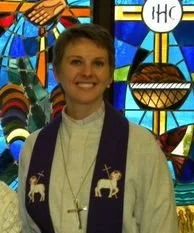
Pastor Tobi White
Our Saviour’s Lutheran Church
Lincoln, NE