“Wheat and Weeds”
Eighth Sunday after Pentecost
July 19, 2026
Philippians 1:3-11
Matthew 13:24-30, 36-43
The parable of the wheat and the weeds. Like I need another reminder that the weeds in my garden and the weeds around this campus are getting out of control. Last week, Rev. Maas pointed out that weeds are just plants growing where they aren’t wanted. By that definition, any plant can be a weed. And any weed can be useful. It just depends on who’s in charge and what they want.
For years, the ideal lawn has been lush green grass, free of dandelions, clover, and crab grass. People spray and fertilize to perfect their lawns. But for the past many years, I do my best to re-seed our yard with micro clover. It’s a great source of nutrients for the lawn. And I let the dandelions grow because their roots break up the packed soil, their flowers offer first nutrients to spring bees, and—though I don’t harvest them—their leaves are healthier than spinach, and you can cook and eat the heads.
So, what is a weed, and who gets to identify them?
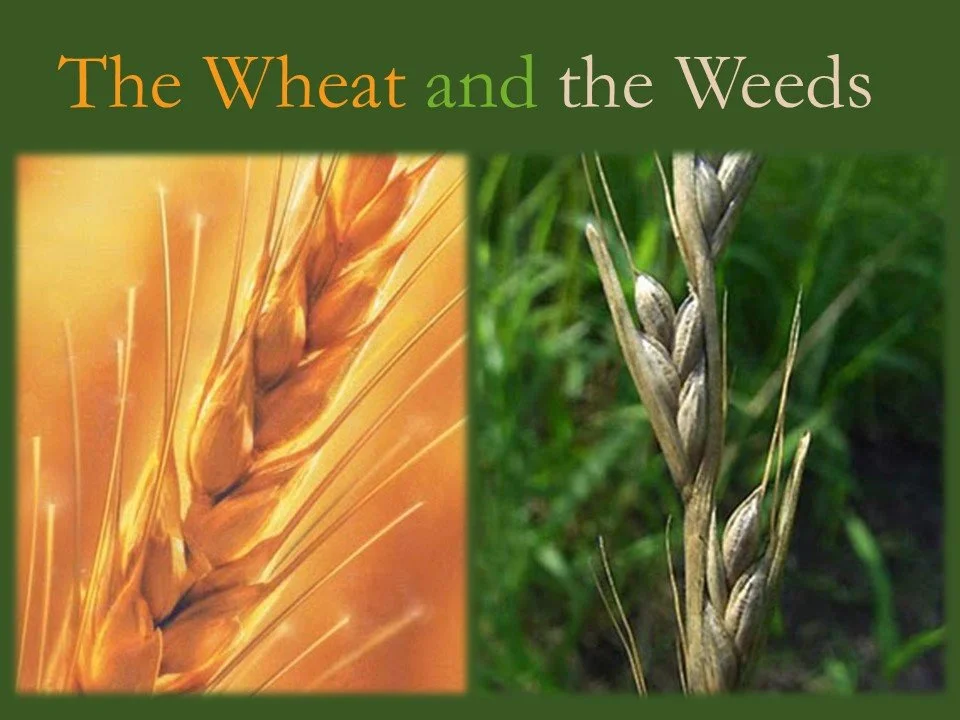
In today’s parable, the farmer has planted the wheat with care, but someone has come along and planted darnel—a false wheat—alongside it. Darnel resembles wheat as it grows, so there was no way to know what had happened until the grain began to form. And by then, it was too late.
Some say darnel offers a rice-like grain. I wonder if it is edible or useful. Either way, it was not what the farmer wanted or needed. In their exuberance, the servants offered to pull the weeds, roots and all. Problem is, by that time, their roots had intertwined with the wheat. Pulling the weeds would have damaged the crop. They would have to finish their growth together.
Now, I find this passage in Scripture unusual—much like last week’s passage. Because it’s the only time Jesus explains the parables with such precision. Parables are best left unexplained—allowing the listener to ponder. They are like poetry, inviting people into the mystery and finding themselves among the various characters as they listen. For Jesus to give such an explicit explanation is not only unusual—it’s unhelpful.
Because his explanation has often been used in harmful ways: The wheat are the righteous people. The weeds are the unrighteous people. The weeds will be gathered and destroyed in eternal flames while the wheat will be collected and used in the service of the kingdom. And for 2,000 years, Christians have been destroying people they don’t like, don’t agree with, and don’t respect.
But Jesus is never that black-and-white. Not only is his explanation too clean; it negates things like hope, transformation, and reconciliation.
There are a couple of elements that I do appreciate about this parable. First, it isn’t the seed that is judged, but the fruit. Because the two plants look so alike, it’s only the fruit that distinguishes one from the other. In the previous chapter in Matthew, Jesus is having an argument with the Pharisees who criticized him for casting out demons, claiming he must be from the demons to have control over the demons. Jesus responds by calling them a brood of vipers and pointing out that their words and actions don’t match. “The tree is known by its fruit.” What you do points to who you are and what you believe. Actions speak louder than words. He closes by saying, “On the day of judgement you will have to give an account for every careless word you utter.”
So, what constitutes a weed? Who qualifies as wheat? And who gets to decide?
The second element I appreciate about this parable is that the farmer doesn’t let the servants ‘fix’ the problem. Instead, he appoints the harvesters to do the work when the harvest time comes. Practically speaking, we don’t get to decide who or what belongs—who or what is righteous. That’s not our job.
In his message on this text, Rev. Travis Norvell of Minneapolis, MN reflects on this past year’s ICE raids, known as Operation Metro Surge. Masked gunmen roamed the streets, pulling people from their homes, out of their neighborhoods, away from their jobs and their families. Citizens and non-citizens, alike. People literally at the courthouses, following all the proper protocol to become citizens. Doing it the ‘right’ way.
The agents were given authority to ‘weed’ people out. Not based on their fruit, but based on some random idea of worth and usefulness. They were pulled out by their roots—roots intertwined with their community. And it did more than remove certain plants. The action destroyed neighborhoods and families, workplaces and faith communities. It had nothing to do with safety and everything to do with power. The ‘servants,’ in this case, were allowed to ‘fix’ the ‘problem.’
This is why God doesn’t send people to determine who is righteous and who is not. We simply aren’t capable of doing it without setting our own agenda. It isn’t our job. It isn’t our job to determine who is worthy of forgiveness. It isn’t our job to determine who should die or burn in hell. It isn’t our job to give preferential treatment to some and starve others, to bomb nations in order to claim mineral rights, to limit rights based on who we are or who we love or even how we love.
Our job, is to work for justice and peace in all the world. It’s the promise we make when we affirm our baptism. And justice isn’t the same as morality. Morality changes with society. Justice is always about making sure everyone has what they need—their daily bread—or, as Luther puts it, “the necessities and nourishment for our bodies, such as food, drink, clothing, shoes, house, farm, fields, livestock, money, property, an upright spouse, upright children, upright members of the household, upright and faithful rulers, good government, good weather, peace, health, decency, honor, good friends, faithful neighbors, and the like.”
Our job is to reflect on our own hearts. What is the fruit we bear? Do we bear fruit that lifts up life and love, or do we sow hate and discord? Do we point to the God of peace and reconciliation, or do we point to a god that serves our own desires?
Our job is to share God’s Good News to all the world—regardless of what we think of them. That Good News is filled with liberty, hope, grace, and mercy. At the end of the day, it doesn’t matter who we have designated as righteous or unrighteous. That’s not our call, as much as we may feel we know, even based on someone else’s fruit. That’s not our call.
That work is left to God and the angels. And thank goodness it is. Because I know I don’t want my life judged by those around me. It’s likely to not look as good as I think it should. And I imagine that goes for many of you, too.
This parable is God’s way of telling us to stay in our lane. We do have work to do, and judging others on behalf of God isn’t part of it. That’s not to say that we don’t hold one another and ourselves accountable for our actions. But when it comes to the last day and the harvest and who deserves God’s grace—well, that’s way above our pay grade.
And that’s good news. Because God judges us differently than we judge ourselves and others. God’s grace is abundant. God’s love is transformative. And God’s field is big enough to make room for us all.
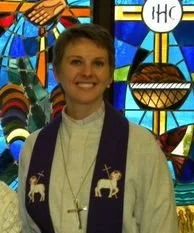
Pastor Tobi White
Our Saviour’s Lutheran Church
Lincoln, NE