“Letting Go of the Rope”
Sixteenth Sunday after Pentecost
September 13, 2026
Romans 14:1-12
Matthew 18:21-35
Twenty-five years ago, many of us watched in horror as airplanes flew into the twin towers of the World Trade Center. In real time. Live. People jumping from unimaginable heights to certain death rather than burning alive. It’s still beyond belief. Years later, many look to the days and months following the attack as the best of American unity.
They say, “I would never ever want another 9/11, but I miss the America of 9/12. Stores ran out of flags to sell because they were being flown everywhere. People were Americans before they were upper or lower class, Jewish or Christian, Republican or Democrat. We hugged people without caring if they ate at Chick-Fil-A or wore Nikes. On 9/12, what mattered more was what united us, than what divided us.”
But “when you see the world through rose-colored glasses, all the red flags just look like flags.” The nostalgia of unity doesn’t tell the whole story. Yes, we were united. We united in chaos and trauma and grief. We were united in mourning and confusion. We were also united in hate and fear of one particular group of people: Muslims. All Muslims. Even people who we thought looked like Muslims. Anyone who may have been Arabic. They became the scapegoats. They were afraid to send their kids to school or even leave the house. And they are still experiencing the misplaced blame—when people claim Muslim mayor of New York City shouldn’t be present at the Memorial for those who died on 9/11.
Yes, we experienced a universal trauma. But we did not experience universal unity. And we certainly haven’t learned the most basic of Christian tenets—the practice of forgiveness.
Jesus tells Peter that one should forgive their neighbor seventy times seven. Or seventy-seven times. In Jewish numerology, the number seven is perfection. So, Jesus’ use of ‘seven’ twice is like saying ‘an infinite amount of times.’ There is no maximum number of times one should forgive. What does that mean for us?
Jesus goes on to use an absolutely ridiculous parable to explain. Imagine a ruler who decides it’s time to collect on the debts owed him. He calls in someone who owed more than he would ever be able to repay in a dozen lifetimes and suggests that the only way to get any money out of this guy is to sell all his property and him and his family as slaves. But the man falls to his knees, begging for more time. The ruler realizes repayment is impossible and wipes the slate clean.
That same day, the man decided he’d better collect on debt owed him so that he would be able to repay his other debts. Not everyone would be as generous as the ruler. He starts with someone who owed him a small amount. But that person was unable to pay and fell to his knees, begging for more time. In this case, it’s a reasonable request, and he probably would have been able to come up with the money with a little notice. But the man refuses and has him thrown into prison. Don’t get me started on the stupidity of debtor’s prison. As if someone in prison has any way of repaying a debt they couldn’t pay while on the outside.
When the ruler found out, he rescinded his generosity and decided to get his repayment through torture. Which is also stupid because if it was impossible for the man to repay his debt while working, he certainly can’t repay it by being tortured. Seriously. Who comes up with these systems, anyway?
But, here’s the rub, Jesus says that God will deal with us in the same way as the ruler if we don’t offer forgiveness to those who have wronged us. What?
So, before we go all ‘purgatory’ about this, let’s unpack it. First, the parable was hyperbole. Everything about it—from the amounts owed to the responses of prison and torture—are meant to illicit an emotional reaction. And they do. Disbelief. Fear. The one thing the parable shouldn’t leave us with is a sense of superiority or comfort.
Second, God doesn’t need to torture us when we don’t forgive. We do that all by ourselves. That is the result of withholding forgiveness. The saying goes, “Before you embark on a journey of revenge, dig two graves.” Because withholding forgiveness is like drinking rat poison and then waiting for the rat to die. It kills you from the inside. It is its own torture. And more often than not, the person from whom you’re withholding forgiveness doesn’t even know it. They don’t experience your wrath. They live rent-free in your head—and your heart.
So, let’s review what forgiveness isn’t. It isn’t denial of the event. In fact, the act of forgiveness comes necessarily with the act of accusation. To forgive means to name the offense. And to name the hurt. It doesn’t mean to forget, either. There are consequences for hurtful actions. They don’t go away. And reconciliation isn’t a guarantee. Forgetting an action means putting oneself in a position of being hurt again. That is not part of forgiveness.
Forgiveness isn’t a shortcut to healing. It is a long, complicated, many-layered journey. One that often means coming back around to forgive the same event again, and again. Until you’re finally free of its hold on you.
And now—what forgiveness IS. It is a process of love practiced among people who love poorly. Because the truth is that we who need to forgive are also the ones who need forgiveness, ourselves. Forgiveness is necessary for community. Forgiveness is also a new way of seeing—a way of looking forward instead of focusing on the past. That’s why the windshield is bigger than the rear-view mirror. How many of us, when thinking about our past, focus primarily on the hurts and slights done to us? How many of us tell the stories of our pain, over and over again, until that is all that we are?
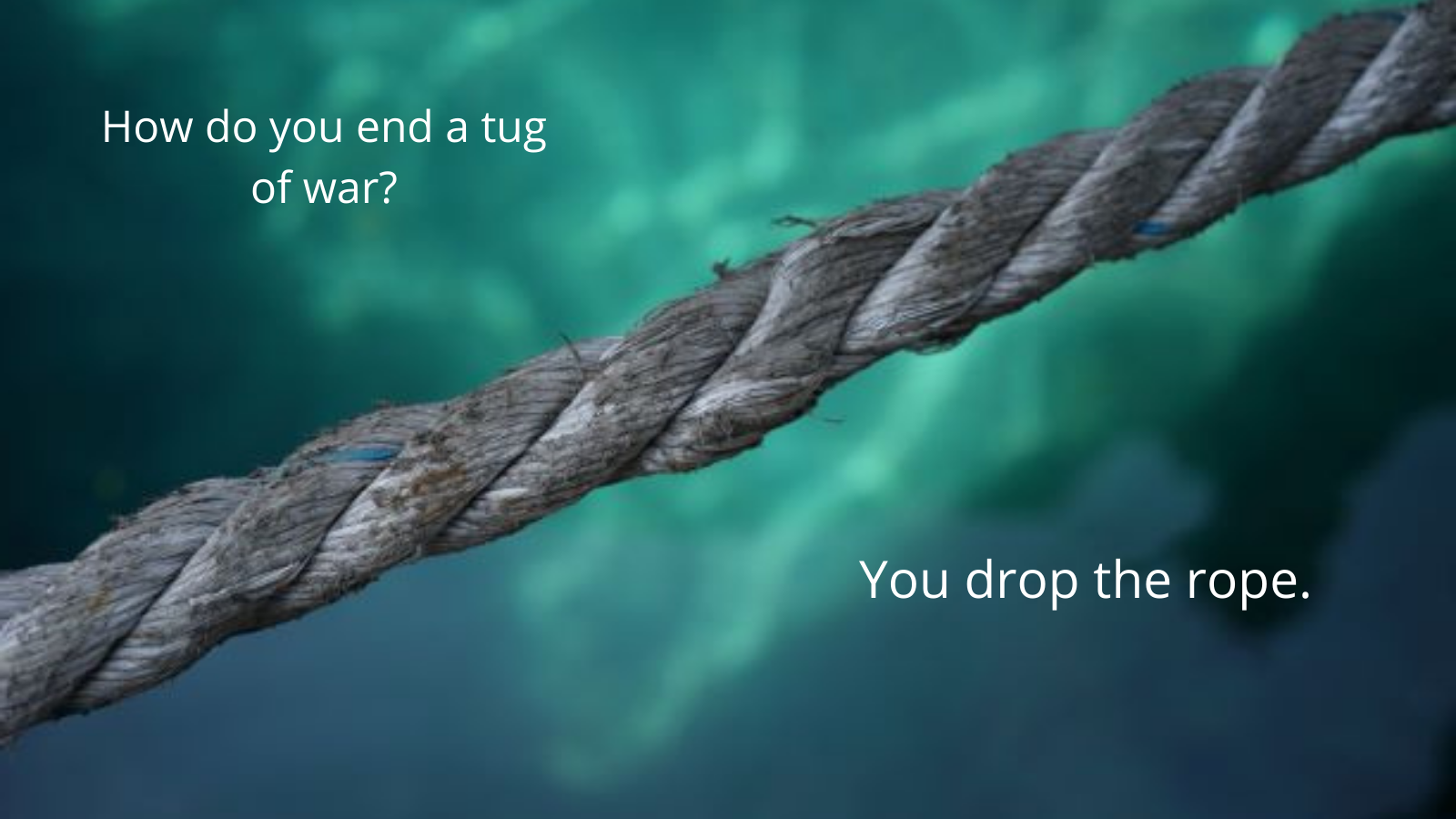
When I was growing up, I remember working with a horse I was given. She was only about 2 and was a bit ‘spirited.’ I was leading her around the corral when she decided to bolt. It took a hot second before I heard my grandpa shouting for me to let go of the rope and let her go. I was at risk of her hooves hitting my head. But I was so focused on not letting her get away from me that I had a hard time letting go of that rope. Forgiveness is letting go of the rope of a runaway horse so that you don’t get your head bashed in.
Twenty-five years ago, this country renewed its unity around a common evil—a scapegoat for all of our hurts and griefs. And we still can’t seem to let go of that rope. And various leaders will tell us who should be on the other end—groups that deserve our blame and hatred and fear. But the truth is, we are our own worst enemy. Until we let go, we can’t begin a process of healing.
Nadia Bolz-Weber says,
“Maybe retaliation or holding onto anger about the harm done to me doesn’t actually combat evil. Maybe it feeds it. Because in the end, if we’re not careful, we can actually absorb the worst of our enemy, and at some level, start to become them. So what if forgiveness, rather than being a pansy way to say, ‘It’s okay,’ is actually a way of wielding bolt-cutters, and snapping the chains that link us? What if it’s saying, ‘What you did was so not okay, I refuse to be connected to it anymore.’? Forgiveness is about being a freedom fighter. And free people are dangerous people. Free people aren’t controlled by the past. Free people laugh more than others. Free people see beauty where others do not. Free people are not easily offended. Free people are unafraid to speak truth to stupid. Free people are not chained to resentments. And that’s worth fighting for.”
Pastor Tobi White
Our Saviour’s Lutheran Church
Lincoln, NE