“Respect My Authority”
Eighteenth Sunday after Pentecost
September 27, 2026
Ezekiel 18:1-4, 25-32
Matthew 21:23-32
If you’ve ever seen the show South Park, you’ll likely be familiar with the character named Cartman. Every once in a while, he dresses up in a cop’s uniform and ‘polices’ the area. And when anyone suggests he has no right, he insists that they “Respect my authority.” The problem is, what authority is that? And where does it come from?
That’s the question various leaders corner Jesus with in today’s text. But this doesn’t come out of the blue. The previous day, Jesus rode into Jerusalem on a donkey to the cries of the people: “Hosanna in the highest! Blessed is he who comes in the name of the Lord! Hosanna to the Son of David!”
Once he reached the Temple, he literally upended the sweet deal that religious and government leaders had going on there. He disrupted the money traders and animal-sellers who were overcharging for the opportunity to worship. He essentially starts a riot, challenging the leaders who were taking advantage of both the people coming to worship and those selling the right to do so.
Today, he’s back in the Temple teaching. And the chief priests and elders have come to pin Jesus down. You see, the chief priests and elders were on opposites sides of the political fence. The chief priests had been put into their positions by the Roman governors. They served Rome in exchange for wealth and the illusion of power.
The elders, on the other hand, were elevated by the common people and trusted to advocate for them. They served the people and were, therefore, concerned most about how the people perceived them. Both groups witnessed the chaos of the previous day, and both groups had experienced first-hand the disruption Jesus caused. Therefore, both groups cornered him in an effort to find out who HE served—Rome or the people.
Jesus, never one to be truly cornered, responds by aligning himself with John, a civil rights leader and one who was killed because he challenged the government’s corruption. The leaders know they are in a pickle. If they say John’s work was divine, the chief priests out themselves as disingenuous. If they say it was human, the elders risk the people taking their power away from them. So, they answer politically… “We don’t know.”
Which, honestly, is BS. What they meant was, “We don’t know how to win this argument.” So they resort to lies and manipulation. They don’t care about the truth. And they don’t really care about Jesus’ authority, either. Jesus offers a parable, inviting them to see if they can at least answer one question truthfully.
The landowner has two sons. When he asks them to go work in the vineyard, the first one says he doesn’t want to, but later he changes his mind and does the work. The second one says he’ll go but never does. Which one did what the father asked? Of course, it was the first one.
But this isn’t a moral tale for parents to use against their kids. It’s a tale about hypocrisy. And the leaders hear themselves in it loud and clear. They know that Jesus is talking about their own corruption. This line of questioning is dangerous for those who have bought their way into leadership positions.
To make matters worse, Jesus goes on to say that the immoral tax collectors and prostitutes will actually be the ones to lead the religious leaders into God’s kindom. I can’t imagine that sat well with the chief priests and elders. It probably didn’t sit well with anyone in the crowd—because tax collectors and prostitutes were considered the worst of the worst. They sold themselves—their identities and their bodies—to those who would take advantage of them.
Jesus doesn’t elevate them because of what they do—but how they respond to him. It’s because they believe John and Jesus. They believe and repent and are transformed and they follow—in humility. While the religious leaders don’t see the need to repent, they lie to keep power and double down on the actions it takes to hold on to their positions. They don’t change and they don’t intend to change. They serve only themselves. They worship only themselves. And they don’t like the mirror Jesus holds in front of them.
We see Jesus’ teachings over and over again in our lives and in our cities—in our government and in our churches. On whose authority does one act? Many will claim their actions and decisions are based on God or the Bible. But the true test is this: Who benefits? Who is harmed? The answers to those questions help us discern whether one truly acts on behalf of God—or themselves. It is a lens through which we can make our decisions. It is also a mirror. What do we want to see on the other side?
The good news of this parable is the example of the first son. He didn’t want to do the work. Maybe he wasn’t interested. Maybe he was busy. It doesn’t matter. Because in the end, he changed his mind. He did it anyway. He fulfilled his responsibility.
The parable shows us it is never too late to turn around. It is never too late to repent. It is never too late to change course. To drop the façade. To become vulnerable in service to God and others. To follow in humility. And, Jesus doesn’t say that the corrupt officials won’t enter God’s kindom. It’s just that they will be led into it by those who know their worth in Christ rather than trust in what they’ve built for themselves.
Friends, regardless what you’ve done or where you’ve been, who you are or who you wish you were—you are God’s beloved. Your worth isn’t in power or achievement or money or grades or authority. Your worth is in Christ alone. All these other things that grab for our attention are human constructs—ways to pit people against people. And while these things have value and are often important in living in this world, they only have as much authority as we give them.
You are not your job or your success or your bank account. You are not the car you drive or the status you hold. You are not your inmate number or your addiction. You are not your gender or your relationship status. You are you. Vulnerable. Beautiful. Magnificently made and loved beyond measure.
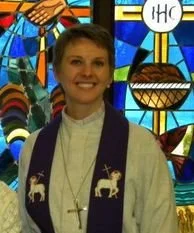
Pastor Tobi White
Our Saviour’s Lutheran Church
Lincoln, NE